Oil Is Not Just Gasoline
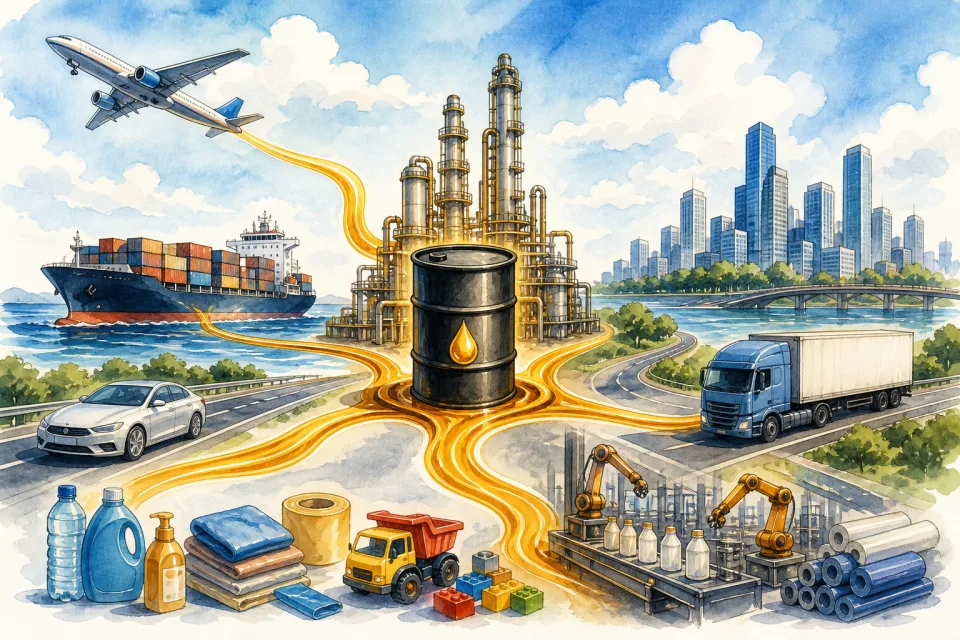
When most people hear the word oil, they picture a gas station. That is only the most visible part of the story. Oil also moves delivery trucks, cargo ships, airplanes, farm equipment, mining machines, construction vehicles, and emergency fleets. It helps make plastics, packaging, synthetic clothing, roads, tires, paint, medical supplies, and thousands of everyday products. Oil sits quietly underneath modern life, even when we do not notice it.
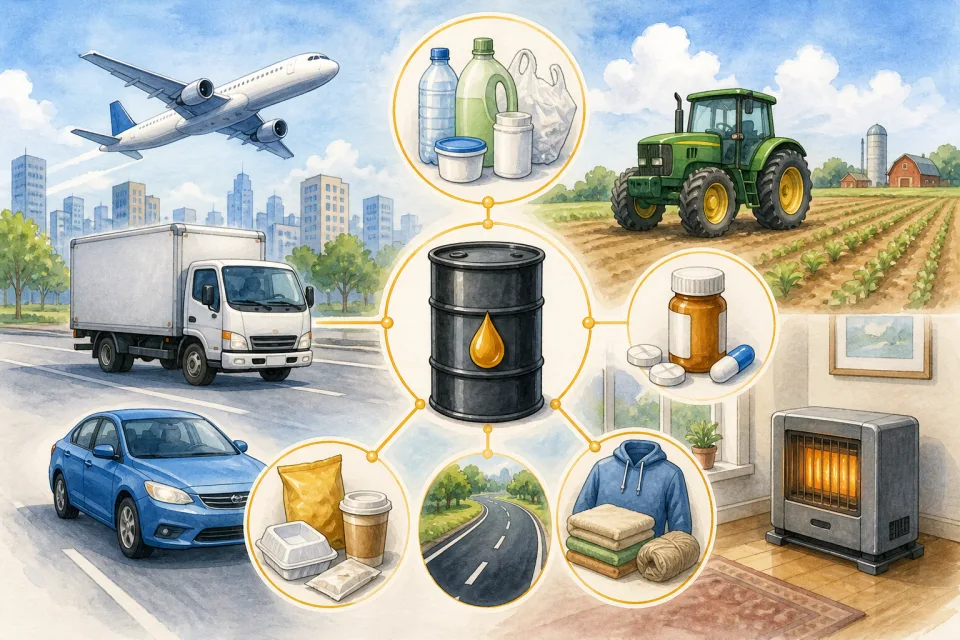
That is why oil prices matter even if you do not own a car. If diesel gets more expensive, moving groceries gets more expensive. If jet fuel rises, airlines feel it. If petrochemical feedstocks cost more, packaging and manufactured goods can feel pressure too. A barrel of crude oil starts in an energy market, but the price can travel through the economy like a message passed from business to business until it reaches ordinary people.
The Long Story Of Oil
Oil has a strange origin story. The U.S. Energy Information Administration explains that crude oil was formed from the remains of ancient plants and animals that lived in seas millions of years ago. Over time, heat, pressure, and layers of rock changed that organic material into the liquid fuel we now pull from the ground. In plain language, oil is ancient stored energy.
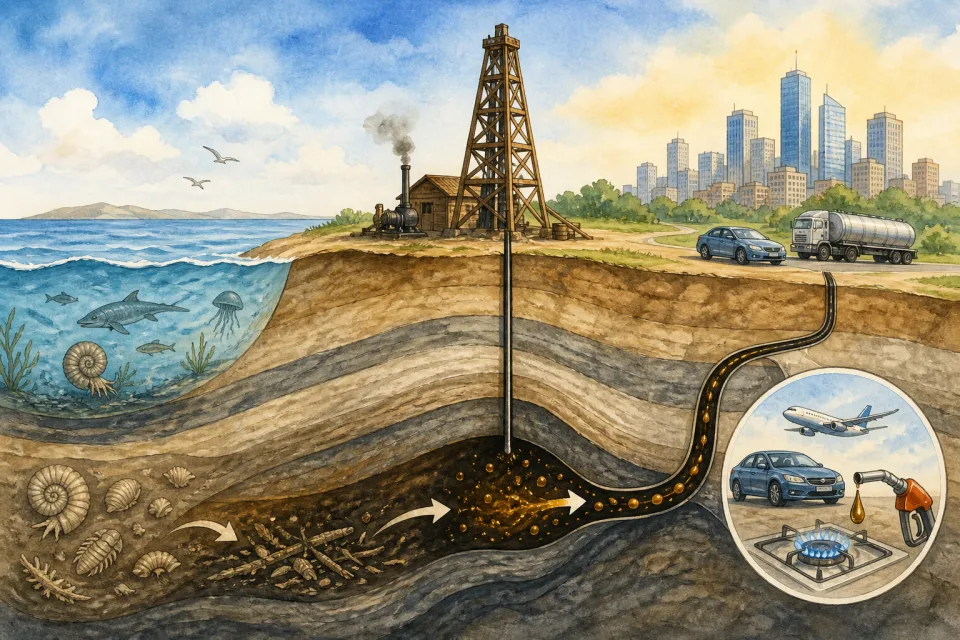
Oil became powerful because it packed a lot of energy into a small space. Early oil demand grew through lighting and kerosene, but the real explosion came when cars, trucks, airplanes, ships, tractors, and factories needed liquid fuel that could be stored, transported, and burned on demand. Coal helped build the industrial age, but oil helped make the world fast. Roads stretched farther. Supply chains became global. Food could travel farther. People could fly across oceans. Armies, businesses, and households all learned to depend on liquid fuel.
How Crude Oil Becomes Useful
Crude oil does not come out of the ground ready to use. Companies first search for underground oil using geology, seismic data, drilling, and engineering. Wells may be drilled vertically, directionally, or horizontally. Some fields also use hydraulic fracturing to help oil flow out of rock. Once oil is produced, it has to move through pipelines, ships, rail, barges, or trucks before it reaches a refinery.
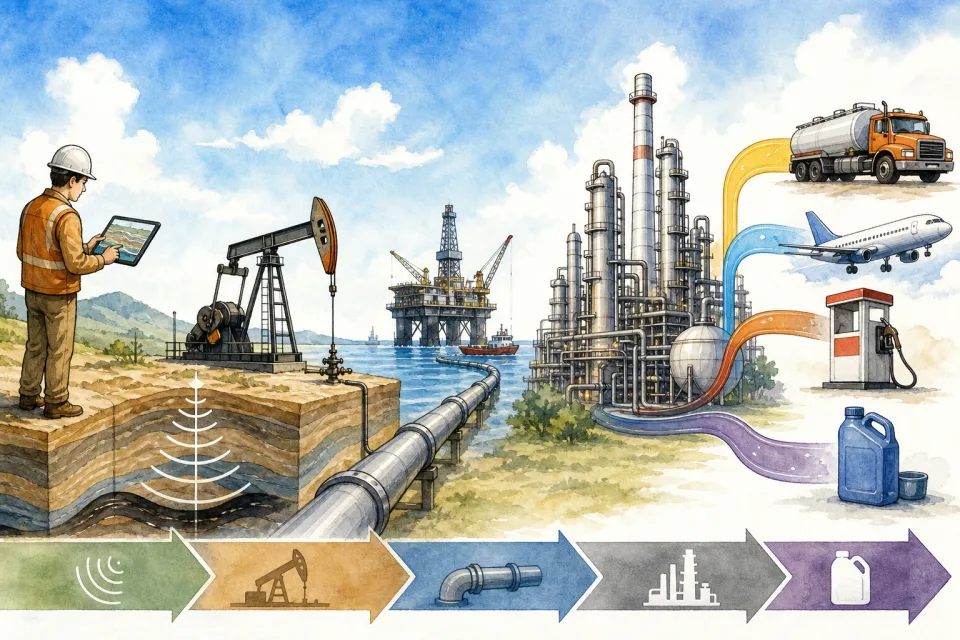
A refinery turns crude oil into finished products by separating and processing it. Gasoline, diesel, jet fuel, heating oil, asphalt, propane, and petrochemical feedstocks can all come from the same barrel. The mix depends on the type of crude, the refinery, and market demand. That is why oil is not one simple product. It is a raw material that gets transformed into many pieces of the modern economy.
Why A War Can Move Oil Prices Overnight
Oil prices move on supply and demand, but they also move on fear. On September 1, 2026, Reuters reported that Brent crude settled at $94.65 per barrel and U.S. West Texas Intermediate settled at $90.22 after renewed U.S.-Iran fighting. MarketWatch also reported that global oil prices jumped to a six-week high after U.S. strikes in Iran and concerns about possible disruption around the Strait of Hormuz. In other words, the Trump-Iran war headline quickly became an oil-price story. The market reaction was simple: if traders think less oil might reach the world, prices can rise before any shortage is felt at the gas pump.
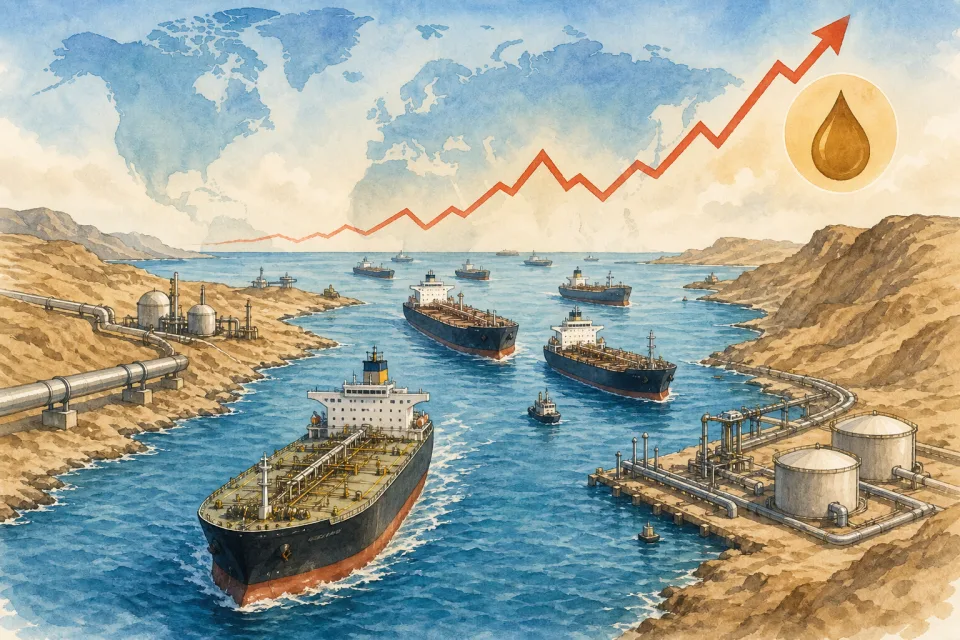
The Strait of Hormuz matters because it is one of the most important oil shipping lanes on earth. The EIA has described it as the world's most important oil transit chokepoint, with about 21 million barrels per day moving through it in 2018. That was roughly one-fifth of global petroleum liquids consumption at the time. When fighting, sanctions, tanker attacks, or political threats involve that region, oil traders pay attention immediately. It is not because every barrel disappears. It is because the world cannot easily replace a major route overnight.
How Rising Oil Prices Reach Your Wallet
A higher oil price does not always hit everyone at the same speed, but the direction is easy to understand. Gasoline can rise. Diesel can raise delivery and trucking costs. Jet fuel can pressure airline tickets and shipping by air. Farmers use fuel for equipment and transportation, so food costs can feel the pressure too. Manufacturers that rely on oil-based chemicals or packaging may also face higher costs.
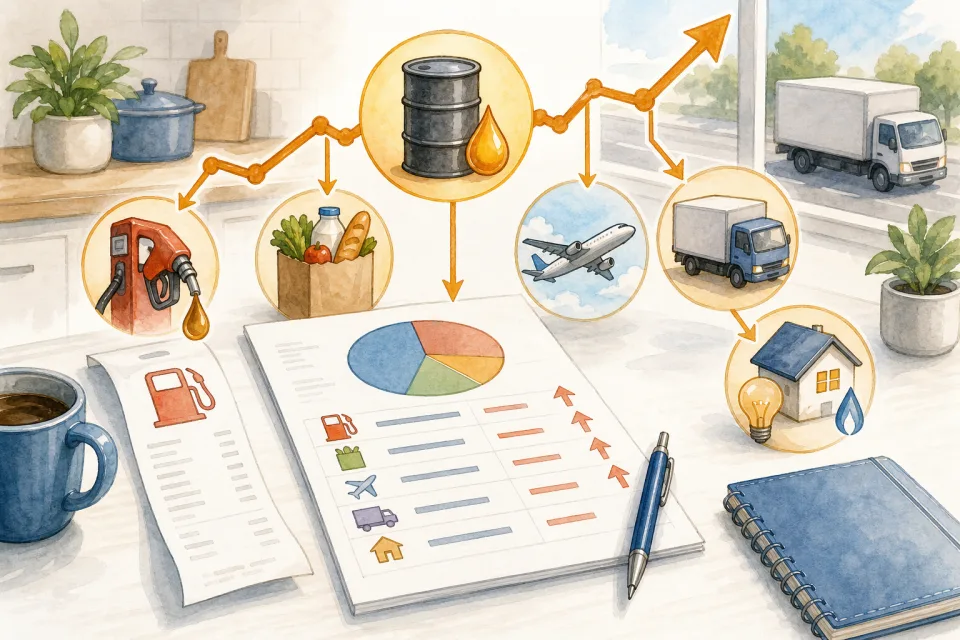
This is why oil can become an inflation story. When energy gets more expensive, many businesses either absorb the higher cost or pass some of it on to customers. If prices stay high long enough, central banks, bond markets, companies, and households all have to react. For a family, that can mean less room in the monthly budget. For a business, it can mean thinner profit margins. For a country, it can mean trade pressure if it imports more oil than it produces.
Oil's Future Is Changing, Not Disappearing
The world is moving toward cleaner energy, but that does not mean oil demand simply falls to zero. Electric vehicles can reduce gasoline demand over time. Solar, wind, batteries, nuclear power, and grids can reduce dependence on fossil fuels in parts of the economy. But airplanes, ships, heavy industry, petrochemicals, plastics, and many developing economies are harder to change quickly. Some oil demand may shrink. Some may stay sticky. Some may shift from fuel into materials.
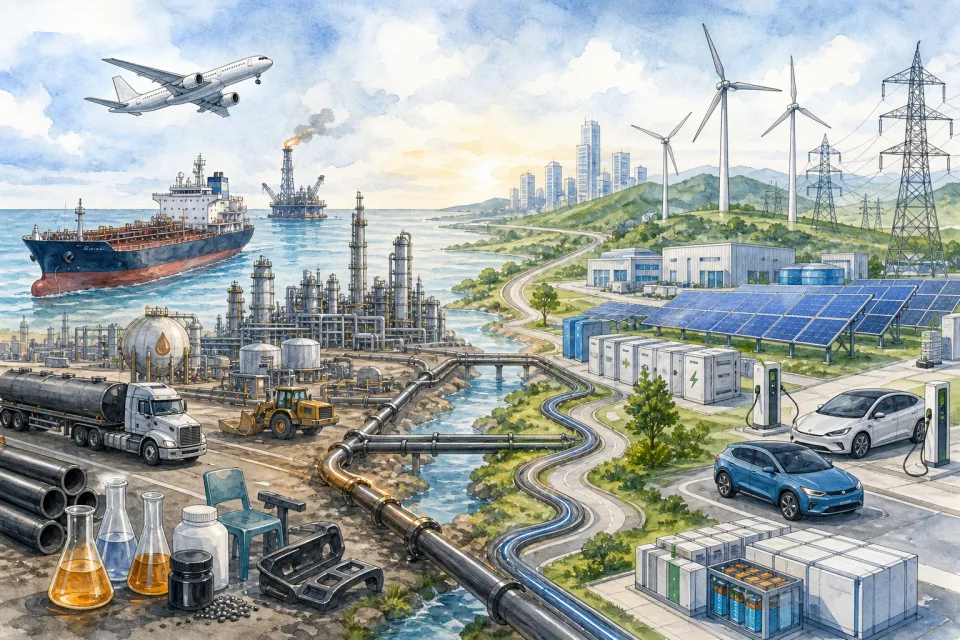
The International Energy Agency has pointed out that petrochemicals are becoming a major driver of oil demand growth, while transport fuels still make up the largest share of oil product demand. That is the key idea: oil's future may be less about everyone burning more gasoline forever and more about which parts of the economy are easiest or hardest to replace. The winners will be the countries, companies, and households that understand the transition without pretending oil no longer matters.
The simple takeaway is this: oil still runs much of the world because it is energy, transportation, industry, chemistry, and geopolitics in one market. A war headline can move the price. A shipping lane can affect global supply. A refinery outage can change fuel costs. A long-term shift to clean energy can change which oil products matter most. You do not need to trade oil to care about it. If you buy groceries, pay for gas, book travel, invest, run a business, or plan a household budget, oil is already part of your financial life.
Sources
- Oil prices settle up more than $4 a barrel on renewed US-Iran fighting Reuters via Investing.com
- Global oil prices surge to a 6-week high after the U.S. strikes Iran in Hormuz MarketWatch
- Stocks slip under the pressure of higher oil prices and bond yields Associated Press
- Oil and petroleum products explained U.S. Energy Information Administration
- Use of oil U.S. Energy Information Administration
- Where our oil comes from in depth U.S. Energy Information Administration
- Refining crude oil: inputs and outputs U.S. Energy Information Administration
- The Strait of Hormuz is the world's most important oil transit chokepoint U.S. Energy Information Administration
- Short-Term Energy Outlook: Global Oil Markets U.S. Energy Information Administration
- Oil 2025: Executive summary International Energy Agency
- Global Energy Review 2026: Oil International Energy Agency
- oil prices
- why oil matters
- crude oil
- energy markets
- oil production
- oil refining
- Trump Iran war oil prices
- Strait of Hormuz
- global energy
- gas prices
- inflation
- petrochemicals