
A 20% Down Payment Is A Choice—Not A Financial Finish Line
A 20% down payment has a powerful emotional pull. It sounds disciplined. In Canada, it often avoids mortgage loan insurance, which is normally required when the down payment is below 20%. But avoiding that cost does not automatically make buying the stronger wealth-building move. It only changes one part of a much larger calculation.

The real question is not “Can I get to 20%?” It is “What happens if I use that money to buy a home, compared with renting a suitable place and investing every dollar of the difference?” That comparison has to include more than the mortgage payment. It needs the down payment, closing costs, property tax, insurance, maintenance, investment returns, rent growth, home-price growth, and the cost of eventually selling. Leave out any of those pieces and the answer can look much better for one side than it really is.
A House Is More Than Its Mortgage Payment
A mortgage payment is not the full monthly price of owning. The Financial Consumer Agency of Canada lists property tax, home insurance, maintenance, legal work, inspections, title insurance, land-transfer taxes where applicable, and other closing costs among the things a buyer must plan for. Its guidance says closing costs alone are commonly about 1.5% to 4% of the purchase price. None of this makes buying bad. It simply means the payment quoted by a lender is not the entire balance-sheet story.

Rent has costs too: it can rise, it does not build home equity, and a tenant may have less control over the space. But the renter usually keeps more flexibility and does not personally fund the roof, furnace, or resale process. The financial advantage only appears if the renter actually invests the surplus. “Rent and invest the difference” is a plan, not a slogan. Spend the difference instead, and the comparison changes completely.
Long-Run Research Does Not Hand Either Side An Easy Win
It is easy to hear that stocks beat houses, or that real estate always wins, and treat either line as settled science. The evidence is more interesting. A long-run study by Jordà, Knoll, Kuvshinov, Schularick and Taylor examined annual returns across 16 advanced economies from 1870 to 2015. Its full-sample, GDP-weighted averages were 7.04% a year in real total returns for equities and 6.69% for housing. The two broad asset classes were closer than most internet arguments suggest.
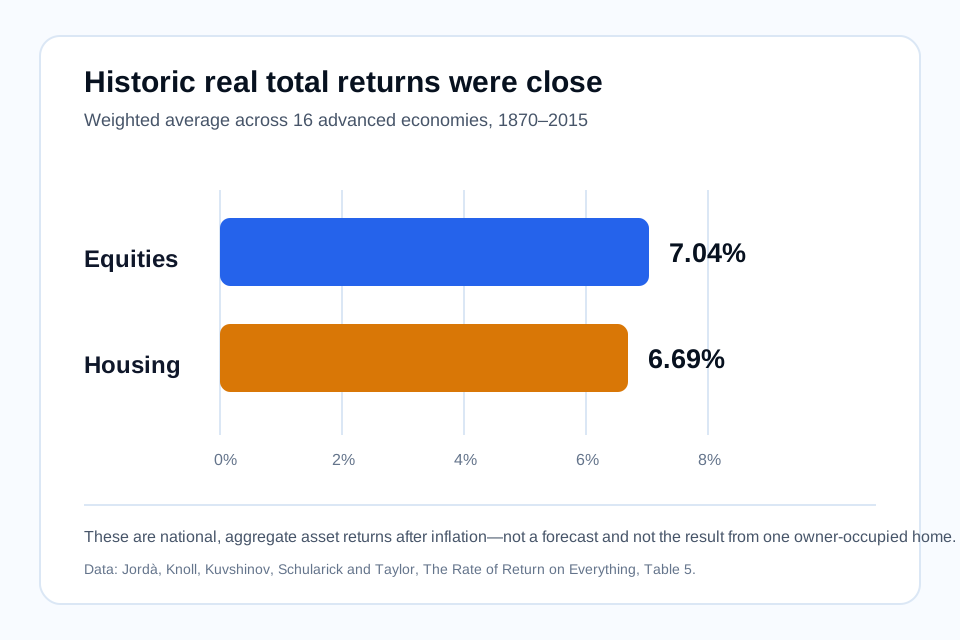
That chart is useful context, not a personal answer. The research measures diversified national housing assets and includes rental income. A person buying one home is taking a concentrated position in one neighbourhood, one property type, and one local market while also borrowing heavily to do it. A renter who invests in diversified funds is taking a different set of risks. The decision is shaped by leverage, costs, time horizon, taxes, and behaviour—not by a single historic return number.
The 25-Year Capital Race: Renting And Investing Wins In This Example
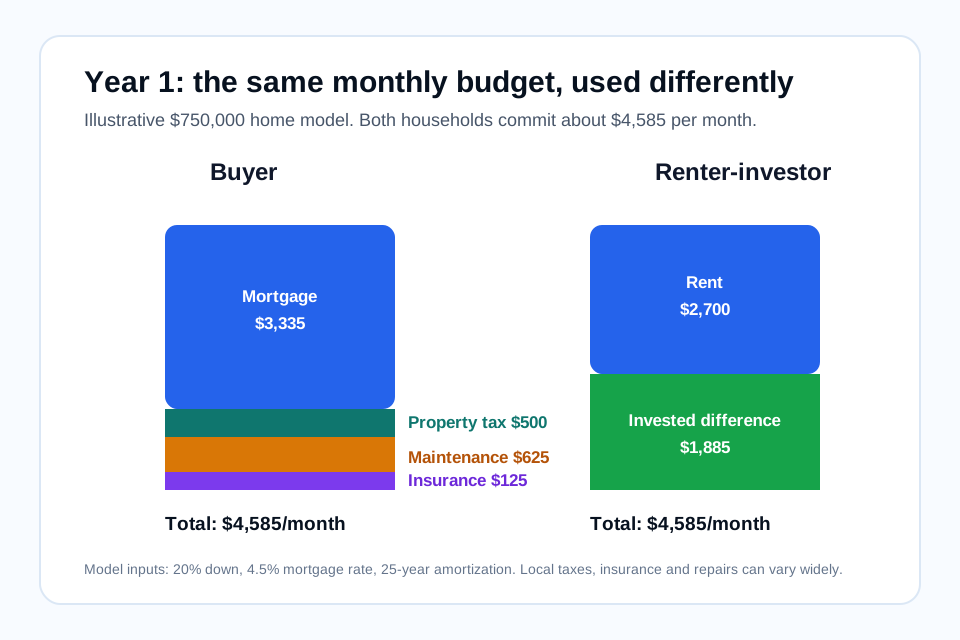
Here is a deliberately simple Canadian benchmark. One household buys a $750,000 home with 20% down, or $150,000. It pays 2% in closing costs, takes a 25-year mortgage at 4.5%, and faces starting annual property tax of 0.8% of the home value, maintenance of 1%, and home insurance of $1,500. The model assumes home prices rise 3% a year, non-mortgage owner costs and rent rise 2% a year, and selling costs are 5% of the eventual sale price.
The renter starts at $2,700 a month, invests the $165,000 that the buyer used for the down payment and closing costs, and invests the ongoing difference between the full ownership cost and rent. The portfolio earns 6% a year in the illustration. These are not forecasts. They are visible assumptions, chosen so you can see what must be true for the conclusion to follow.
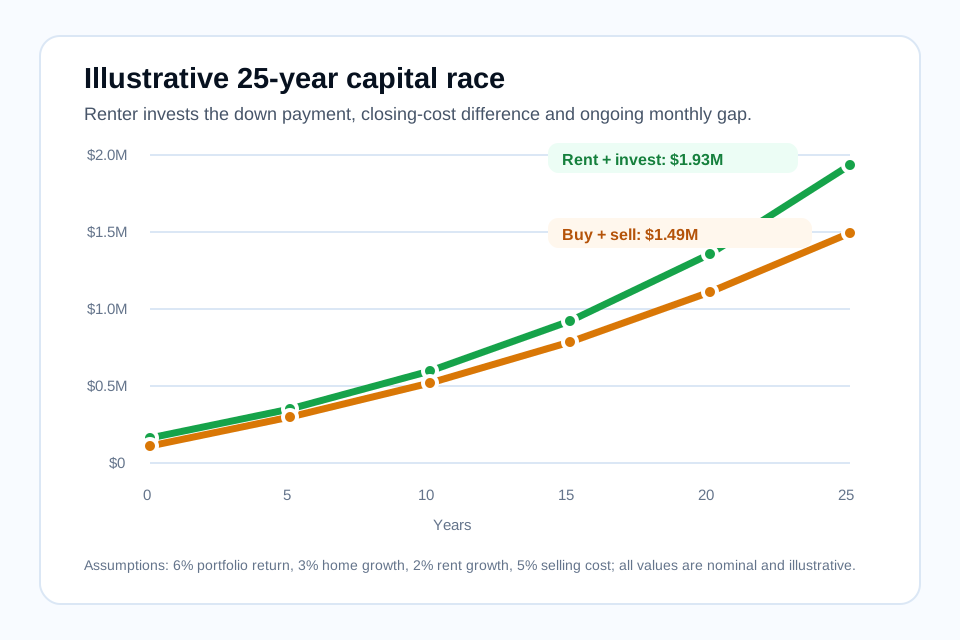
After 25 years, the renter-investor has about $1.93 million. The buyer has about $1.49 million after paying the assumed cost to sell the fully paid-off home. In this example, renting and investing produces about $442,000 more total capital, or roughly 30% more than the buyer’s sale-adjusted equity. That is the conclusion of this specific model: if the renter stays invested and the assumptions hold, renting wins on total capital.
The Assumptions Can Change The Winner
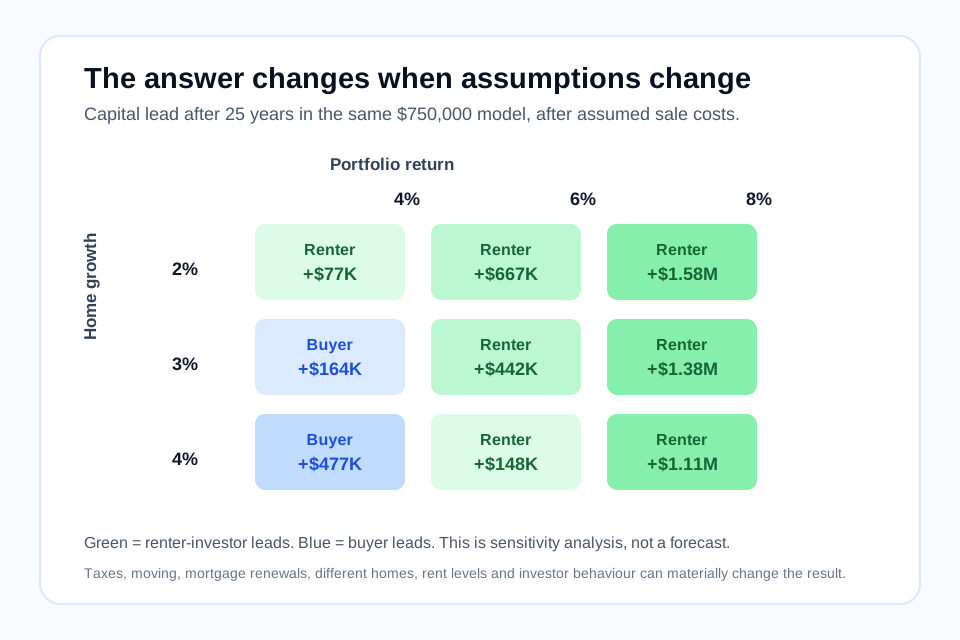
This is the part that should stop anyone from treating a rent-versus-buy article as a personal verdict. If investment returns are weaker or home-price growth is stronger, buying can pull ahead. In the same model, 3% annual home growth combined with a 4% portfolio return puts the buyer ahead by about $164,000. At 4% home growth and 4% portfolio returns, the buyer leads by about $477,000. Change the city, purchase price, rent, years in the home, mortgage renewal rates, property-tax rate, repairs, condo fees, tax account, or the renter’s discipline and the math moves again.
Taxes are another real complication. A principal residence can generally qualify for the principal residence exemption, which can reduce or eliminate tax on a gain when the rules are met. A renter’s investment returns may be sheltered in a TFSA, RRSP, or FHSA only if there is contribution room and the investment is eligible; otherwise taxes can reduce returns. This article deliberately excludes personal tax outcomes because they depend on your facts. That omission can help or hurt either side.
More Capital Is Not The Only Return
This article’s financial conclusion is clear: in the stated 25-year benchmark, renting and investing the difference creates more total capital. But money is not the only return a home can provide. The Financial Consumer Agency of Canada’s own rent-or-buy material lists feelings of security, pride of ownership, attachment to community, independence, the ability to decorate and renovate, flexibility in moving, and freedom from maintenance as legitimate factors. People do not live inside spreadsheets.

If you expect to stay put, value control over your space, want roots in a community, and can comfortably carry the full cost of ownership, buying may be worth the money delta. If you value mobility, want a more diversified balance sheet, or can rent well below the true cost of owning a similar home, investing the difference can be a powerful alternative. The best question is not “Which side wins the argument?” It is “Which trade-off can I live with for a long time, without breaking my finances or ignoring what matters to me?”
Sources
- How much you need for a down payment Financial Consumer Agency of Canada
- Buying a home Financial Consumer Agency of Canada
- Your Financial Toolkit: Mortgages Financial Consumer Agency of Canada
- The Rate of Return on Everything, 1870–2015 Federal Reserve Bank of San Francisco
- Capital Gains – 2025 Canada Revenue Agency
- What is a TFSA Canada Revenue Agency
- rent vs buy Canada
- renting versus buying a home
- 20 percent down payment
- rent and invest the difference
- homeownership costs Canada
- mortgage versus rent
- down payment investing
- rent versus buy calculator
- home buying costs
- homeownership versus investing