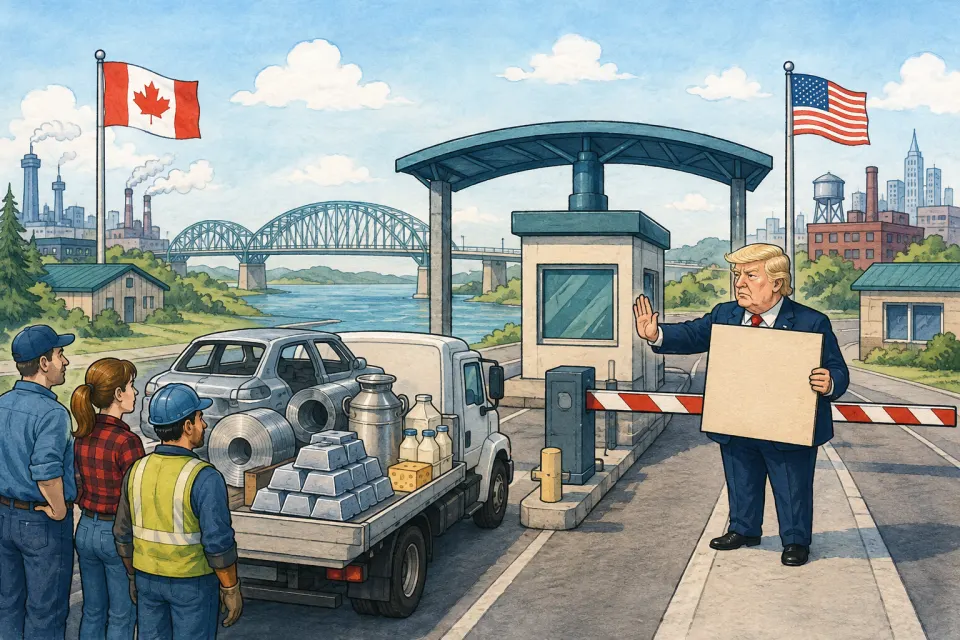
A Tariff Is A Border Tax—Not A Bill Sent To Another Country
A tariff is a tax on a product when it enters a country. If a U.S. business imports a Canadian-made part, the U.S. importer normally pays the tariff at the border. If Canada puts a counter-tariff on a U.S. product, the Canadian importer normally pays it when the product enters Canada. That is the simple mechanics. The harder question is who carries the cost after that.
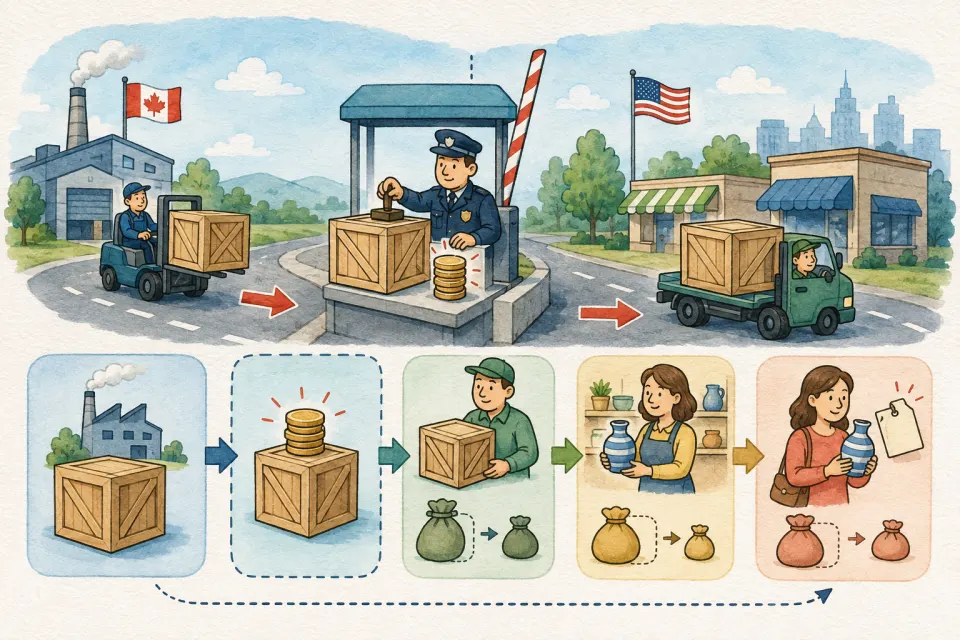
A retailer may raise its price. A U.S. buyer may ask the Canadian supplier to cut its price. The buyer may accept a smaller profit, switch suppliers, or stop buying. In a tightly linked supply chain, several of those things can happen at once. So the slogan that a tariff is paid entirely by the foreign country is too simple. The exporter can feel it, the importer can feel it, and shoppers and workers can feel it later.
Tariffs can have a purpose. A government may use one to protect a domestic industry, respond to another country’s policy, raise bargaining pressure, or address a national-security concern. But a tariff is still a cost added to a cross-border transaction. Whether the policy is worth that cost is a political and economic judgment—not a magic source of free money.
The History Lesson: Tariffs Can Protect One Group While Hurting The System Around It
Tariffs are not new. The famous warning from the 1930s is the U.S. Smoot-Hawley Tariff Act. It arrived during the Great Depression and was followed by retaliation and a sharp collapse in world trade. The U.S. State Department’s history office is careful about the claim: scholars debate exactly how much Smoot-Hawley itself deepened the Depression. But it also says the policy became a symbol of “beggar-thy-neighbor” trade fights and that world trade fell about 66% between 1929 and 1934.
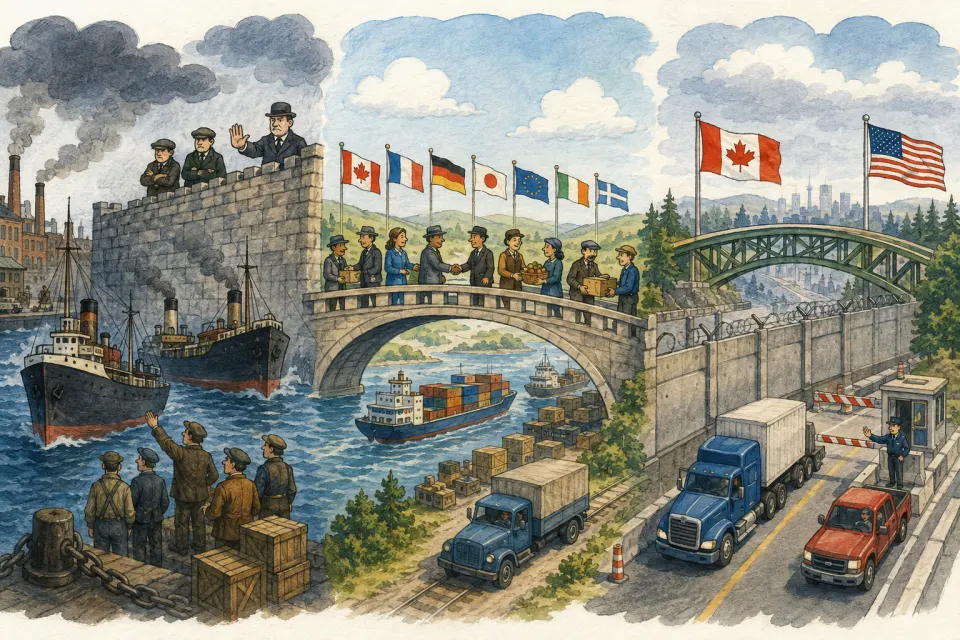
After the Second World War, countries spent decades trying to make trade rules more predictable. The General Agreement on Tariffs and Trade, or GATT, ran from 1948 to 1994 and helped guide major rounds of tariff reductions. Later came the World Trade Organization and regional deals. The point was not that countries would never disagree. It was to create rules, negotiations, and dispute processes so a disagreement would be less likely to become a widening cycle of new taxes.
For Canada, the practical version of that history is North American free trade. NAFTA began in 1994, and CUSMA—called USMCA in the United States—replaced it on July 1, 2020. These agreements did not remove every trade dispute, and they never made every product tariff-free in every circumstance. They did make the basic expectation clear for many businesses: a qualifying product could cross the border without a normal customs tariff. That predictability is what recent tariff fights have disrupted.
The First Trump Tariff Fight Showed How Intertwined Canada And The U.S. Are
Trump’s first administration used Section 232 of U.S. trade law to impose tariffs on Canadian steel and aluminum in 2018: 25% on steel and 10% on aluminum. Canada responded with dollar-for-dollar countermeasures on U.S. steel, aluminum, and other goods. Both countries removed those measures in May 2019 after the United States agreed to lift its tariffs.
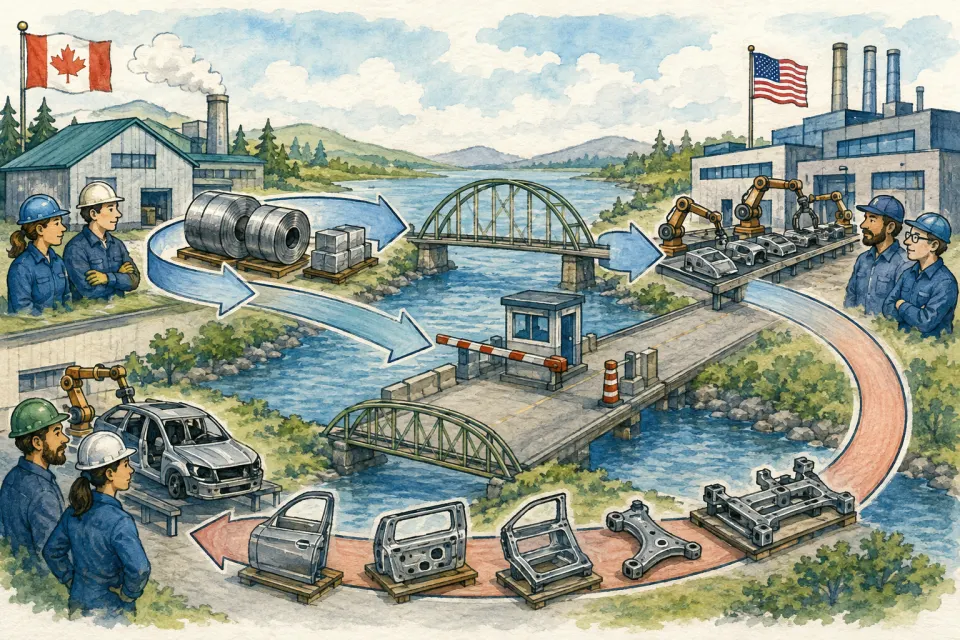
That episode matters because Canada and the United States do not trade only finished products. Canadian metal can enter a U.S. plant, become part of a component, and then cross back into Canada inside a car, machine, or appliance. Tariffs aimed at an input can therefore raise costs for the downstream companies that use it—even when those companies are on the same side of the border as the tariff.
The 2018–19 outcome is not a guarantee that today’s dispute ends the same way. It is a useful reminder that counter-tariffs are designed to create negotiating pressure, while also creating costs that governments may need to soften through exemptions or remission programs. A trade response can be strategically targeted without being painless.
Trump’s New Tariff Push: From 2025 Shock To The 2026 Escalation
The second Trump administration brought several layers of tariffs rather than one simple Canada-wide rule. In March 2025, the United States imposed a 25% tariff on Canadian exports and a 10% rate on Canadian energy products. It also reimposed Section 232 tariffs on Canadian steel and aluminum, and later imposed tariffs on Canadian automobiles. The applicable rate depended on the product, the legal authority used, and whether the product qualified for preferential CUSMA treatment.
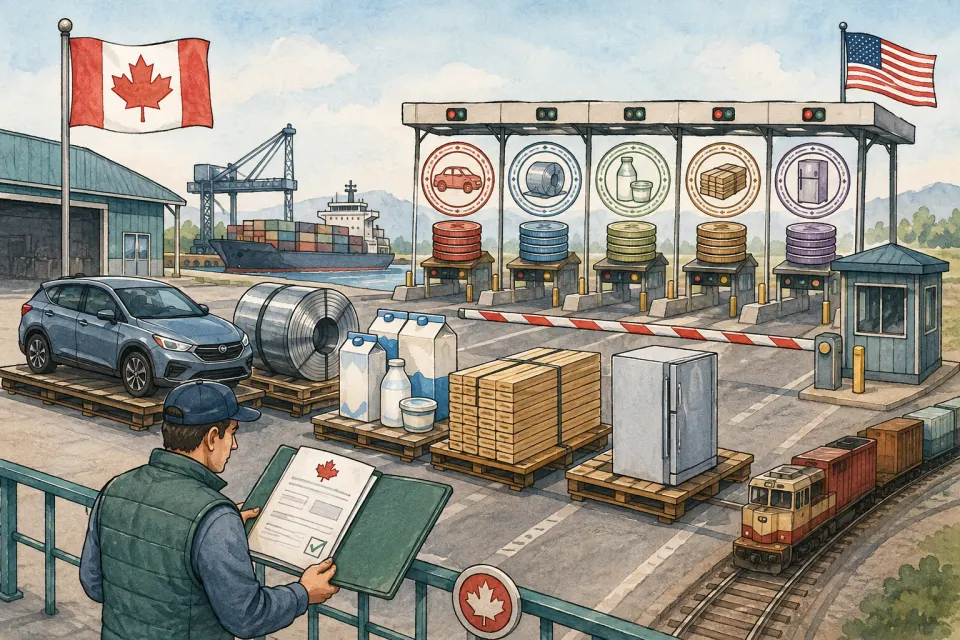
Canada initially answered the 2025 actions with 25% counter-tariffs on selected U.S. imports. In September 2025, it removed many of those broad March countermeasures after the United States continued to allow most CUSMA-qualifying Canadian goods to enter tariff-free. Canada kept its countermeasures on steel, aluminum, and automobiles because the U.S. tariffs on those sectors remained.
The lesson for a business is unglamorous but important: check the current customs guidance. A product’s origin, tariff classification, component content, and date of entry can all matter. A news headline cannot replace a customs broker, legal adviser, or the official tariff schedule when money or a supply contract is at stake.
The Latest Snapshot: A New 50% U.S. Tariff And Canada’s Scheduled Response
This is a fast-moving file, so dates matter. As of September 3, 2026, the Government of Canada says the United States imposed a 50% tariff on $27.6 billion of Canadian goods effective August 22 under Section 338 of the U.S. Tariff Act of 1930. The U.S. Trade Representative says the July actions were aimed at Canadian motor vehicles, alcoholic beverages, dairy, and related covered goods. This is a targeted product action, not a new 50% tax on every Canadian export.
Canada announced a matching, dollar-for-dollar and rate-for-rate response on $27.6 billion of U.S. imports. The announced Canadian counter-tariffs are scheduled to begin September 8, 2026, at rates of 15%, 25%, or 50% depending on the product. The published list concentrates on sectors including steel and aluminum, dairy, appliances, agricultural equipment, pulp and paper, plastics, and electronics. Existing counter-tariffs on U.S. autos also continue.
The key word is scheduled. This article is a snapshot, not a tariff calculator. Governments can amend product lists, create exemptions, offer relief to businesses that cannot source an input elsewhere, negotiate a pause, or take a measure to court. Anyone importing, exporting, or pricing a real contract should go straight to the current government list before acting.
Why The Canadian Economy Feels The Effects Beyond The Targeted Products
The obvious effect is on the company selling the tariffed product. The less obvious effect is uncertainty. If a U.S. customer is unsure what the next tariff rule will be, it may delay an order. If a Canadian manufacturer cannot tell what its inputs or U.S. sales will cost next year, it may delay a factory expansion, equipment purchase, or hiring plan. That pause can touch companies that are not directly named on a tariff list.
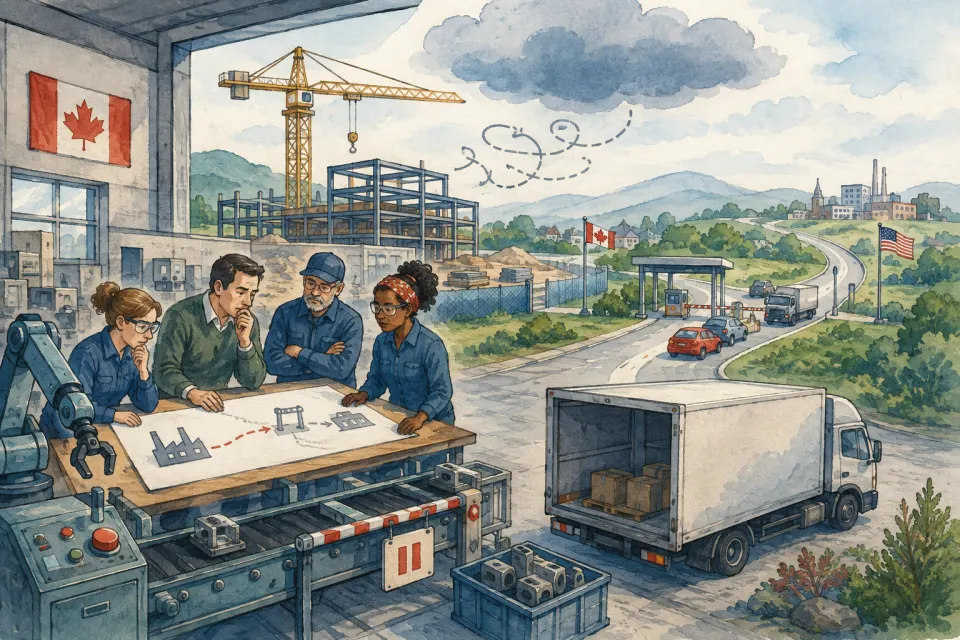
The Bank of Canada’s January 2026 outlook said U.S. tariffs had a persistent negative effect on the Canadian economy and projected that gross domestic product would be about 1.5% lower by the end of 2026 than in its January 2025 report. It said weaker export demand and trade-policy uncertainty were causing some businesses to postpone expansion. That was a forecast comparison made before the latest Section 338 escalation, not a precise measurement of what one new tariff will do. It is still a clear warning about the broader channel: trade barriers can lower activity even when they are concentrated in a few sectors.
Statistics Canada also reported that Canadian merchandise exports to the United States were 11.1% below their March 2025 level by the end of 2025, after businesses had been adjusting to U.S. tariffs and global uncertainty. Exports move for many reasons—currencies, commodity prices, demand, strikes, and supply disruptions among them—so it would be wrong to blame every change on tariffs alone. But the timing and the uncertainty help explain why the issue reaches far beyond a customs office.
What Tariffs Can Mean For A Canadian Household
For households, the first effect is usually not a line item on a pay stub called “tariff.” It may show up as a higher price, fewer product choices, a delayed delivery, or a local employer becoming more cautious. Canadian counter-tariffs can make selected U.S. goods more expensive in Canada. U.S. tariffs can make it harder for Canadian exporters to sell, which can squeeze wages, hours, or investment in exposed communities.
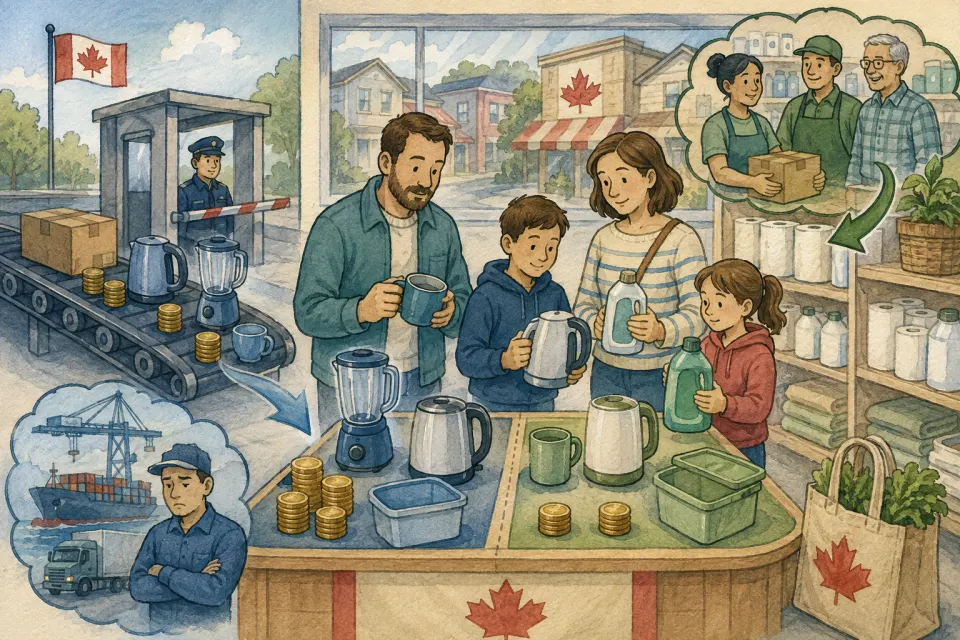
That does not mean every imported product will suddenly cost more, or that every Canadian-made alternative will become cheaper. Businesses can absorb part of a cost, change suppliers, use existing inventory, or change product design. At the same time, a domestic producer may gain some room to compete when a foreign rival becomes more expensive. The outcome differs by product and by how much competition a market has.
The practical response for most people is boring, which is usually good. Do not make an investing or major-purchase decision from one tariff headline. Keep an emergency fund appropriate for your situation, compare prices if a specific product matters to your budget, and give yourself room for a local employer or sector to be affected. If you work in an exposed industry, use official government and employer resources rather than social-media claims to understand the actual product rules and available support.
Canada, The Rest Of The World, And The Long Game
Trump’s trade policy is not only a Canada story. U.S. tariff actions and trade negotiations have involved China, Mexico, Brazil, India, Taiwan, and many other partners, along with product-specific actions in industries such as steel, aluminum, autos, and more. Even when a Canadian product is not directly hit, a tariff elsewhere can reroute global supply, change the cost of an input, or alter which market a competitor serves.
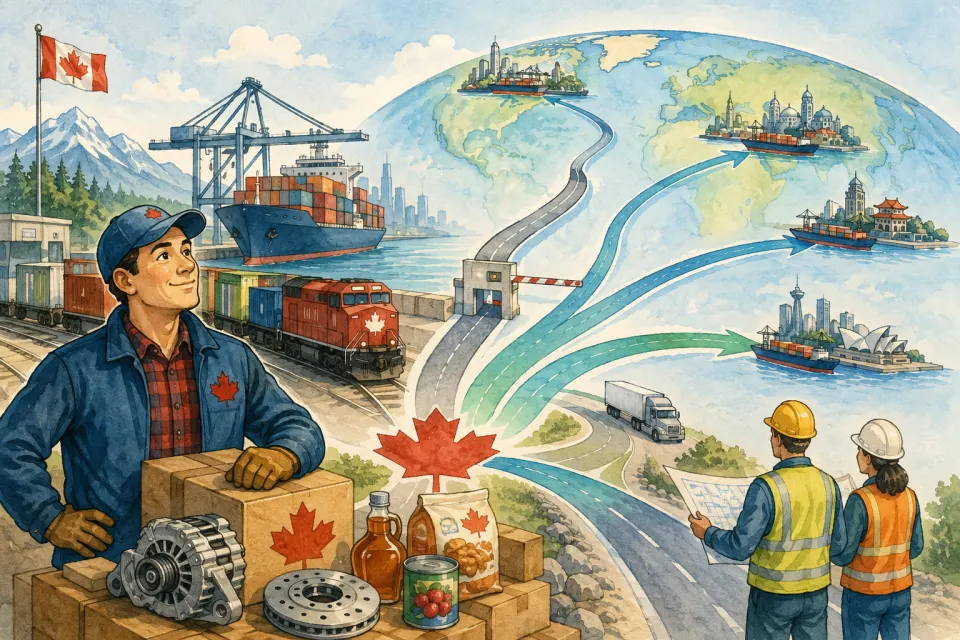
For Canada, the strategic response is not simply to stop trading with the United States. The two economies remain deeply connected, and CUSMA still matters. It is to protect affected workers and businesses, enforce trade rules, keep cross-border supply chains working where possible, and reduce the risk of having only one large outlet for Canadian exports. Finding new customers and suppliers takes longer than announcing a tariff, which is why uncertainty can be expensive even before a product is taxed.
The simple takeaway is this: tariffs are not just a geopolitical argument on television. They are border taxes that can travel through real businesses and real household budgets. Canada’s exposure to the U.S. market makes the effects important, especially in metals, autos, agriculture, manufacturing, and other cross-border supply chains. The exact rules will keep changing. The durable lesson is to read the product-level facts, separate a targeted tariff from a blanket claim, and remember that a trade fight has costs on both sides of the border.
Sources
- Canada’s response to U.S. tariffs on Canadian goods Government of Canada
- Complete list of U.S. products subject to counter tariffs Government of Canada
- Canada announces targeted countermeasures and support in response to U.S. tariffs Employment and Social Development Canada
- Statement on Section 338 tariffs on Canada Office of the United States Trade Representative
- Canadian outlook: Monetary Policy Report, January 2026 Bank of Canada
- Recent developments in the Canadian economy: Spring 2026 Statistics Canada
- Canada eliminates countermeasures as the U.S. lifts tariffs on Canadian steel and aluminum Government of Canada
- Protectionism in the Interwar Period U.S. Department of State, Office of the Historian
- The GATT years: from Havana to Marrakesh World Trade Organization
- United States–Mexico–Canada Agreement Office of the United States Trade Representative
- Presidential Tariff Actions Office of the United States Trade Representative
- Trump tariffs Canada
- Canada US tariffs
- tariff effects Canada economy
- 2026 Canada tariffs
- Canada counter tariffs
- CUSMA tariffs
- USMCA tariffs Canada
- steel aluminum auto tariffs Canada
- tariffs and inflation Canada
- trade war Canada
- Canadian export tariffs
- tariff effects on prices and jobs