The Burger Chain With a Second Job
Calling McDonald’s a real-estate company is a catchy shortcut—not the whole truth. It sells food, builds a global brand, runs restaurants, trains operators, and maintains a huge supply chain. But real estate is also a major part of how its franchise system works. At the end of 2025, McDonald’s had 45,356 restaurants and said about 95% were franchised.
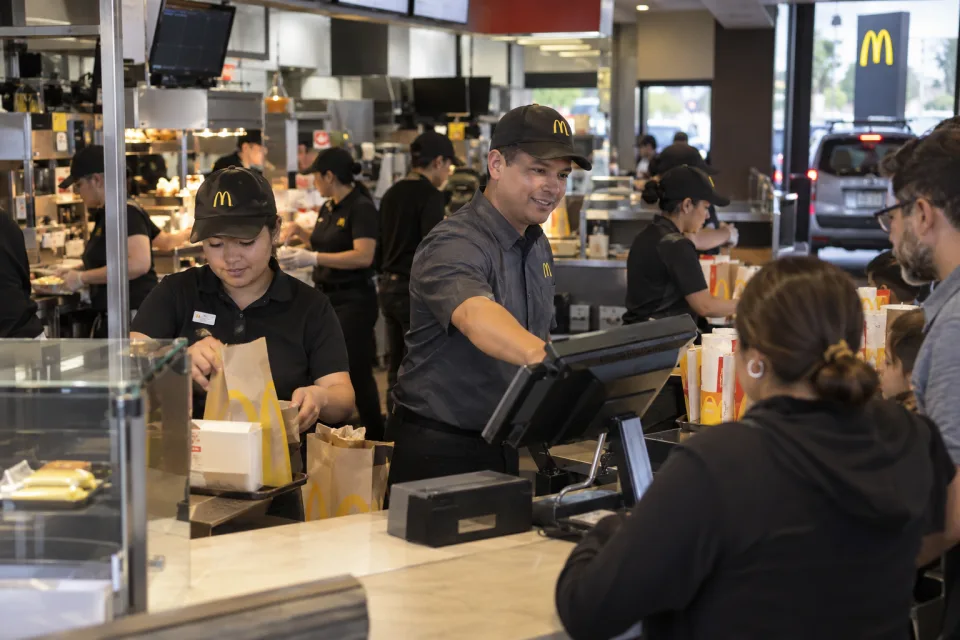
That distinction matters. A franchisee usually owns and operates the local restaurant business. McDonald’s, meanwhile, can earn income from the relationship around that restaurant: a fee tied to sales, rent on the site, and—in company-operated stores—food sales themselves. The result is a restaurant system with a powerful property layer underneath it.
The Franchisee Runs the Restaurant. McDonald’s Often Controls the Site.
Here is the simple version of the conventional U.S. franchise arrangement described in McDonald’s annual report. McDonald’s generally owns the land and building, or holds a long-term lease on them. The franchisee purchases items such as equipment, signs, seating, and décor, then operates the restaurant day to day.
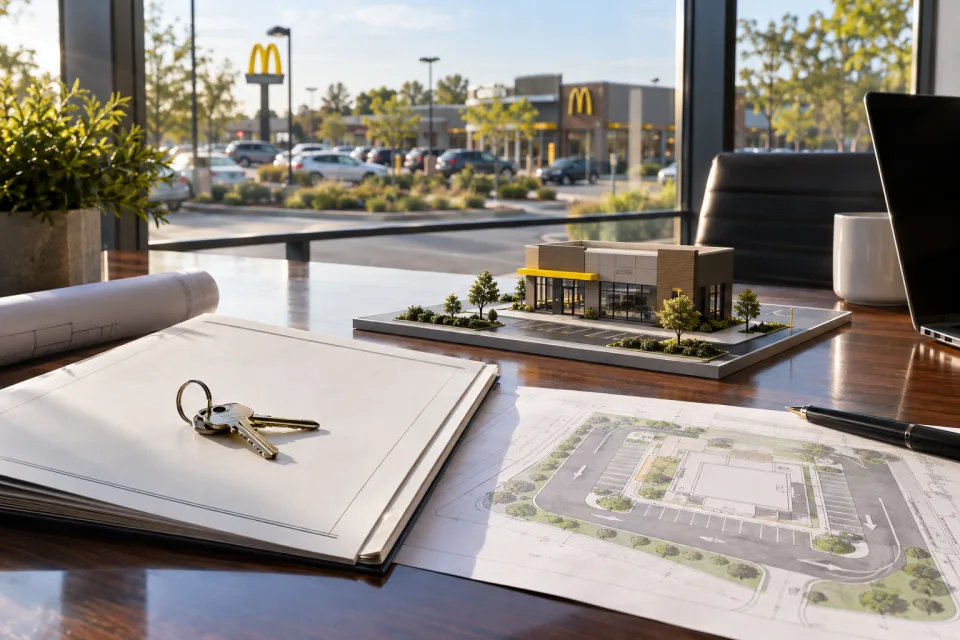
This is not the rule for every McDonald’s everywhere. The company also uses developmental-license and affiliate arrangements, especially in some international markets, where the local operator provides the capital and real-estate interests. Still, the conventional model makes the point: the person making fries may not be the person controlling the address.
One Restaurant, Three Ways Money Can Flow
First, there are company-operated restaurants. Customers buy a meal, and those sales are McDonald’s revenue—but McDonald’s also pays that restaurant’s food, labour, and operating costs. Second, at a conventional franchise, the franchisee records the customer sales. McDonald’s receives rent and a royalty that is generally based on a percentage of those sales, plus an initial fee.
The 2025 numbers show why people notice this model. McDonald’s reported $16.548 billion of franchised-restaurant revenues and $9.690 billion of company-operated sales. Within franchised revenues, rent was $10.442 billion and royalties were $6.018 billion. Those rent and royalty figures are not the franchisees’ total burger sales; they are the amounts McDonald’s recorded from the franchise relationship.
Why the Corner Lot Matters as Much as the Counter
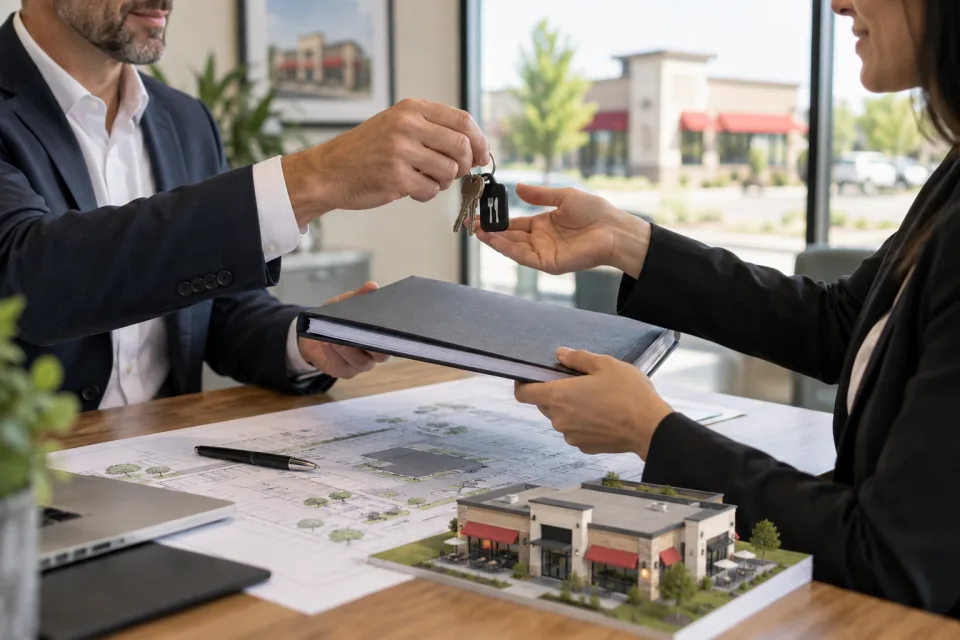
A restaurant can move a menu, but it cannot move a great intersection. High traffic, easy access, nearby homes and workplaces, and room for a drive-through can make one location much more useful than another. Controlling a site lets McDonald’s help choose the spot, protect a standard of presentation, and decide what happens to the building later.
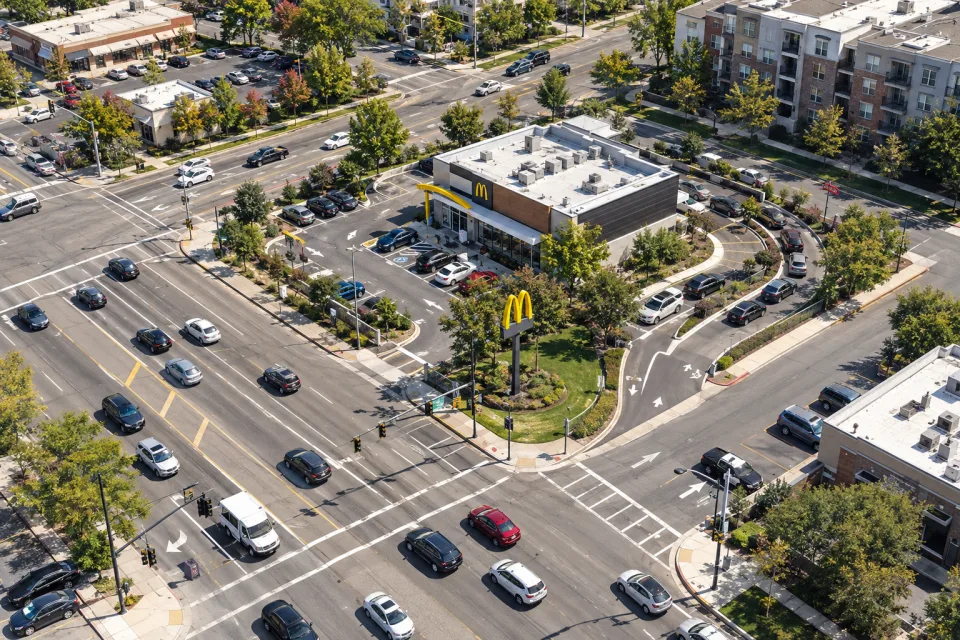
That control is expensive. McDonald’s reported $28.241 billion in net property and equipment at year-end 2025, including $8.169 billion of land. This is not a passive landlord collecting a cheque and walking away. The company carries property costs and location risk, while also using its brand, systems, development team, and franchise network to try to make each site productive.
Rent Is Not a Side Hustle. It Is Part of the Core Model.
Rent can sound like a boring footnote beside burgers and fries. It is not. In the conventional structure, the franchisee pays rent under the property arrangement, generally with a minimum rent and a sales-based component. Royalties are also tied to sales. When a restaurant grows, McDonald’s can participate without having to directly employ everyone in that restaurant.
That is why McDonald’s describes its heavily franchised model as designed to produce stable and predictable revenue and cash flows. Predictable does not mean guaranteed: weak restaurant sales, costly development, higher interest rates, changing consumer habits, or trouble with a franchisee can all hurt results. The real-estate layer strengthens the system; it does not remove business risk.
What Happens When the 20 Years End?
McDonald’s says conventional franchise agreements generally run for 20 years. At the end, it retains control of the underlying real estate and building. It can renew the franchise, choose a new operator, re-franchise the location, or close it. In plain English: operating a restaurant successfully for years does not automatically turn the site into the franchisee’s property.
This long time horizon is the quiet advantage. A popular location may outlast one manager, one menu trend, or even one franchise contract. McDonald’s can keep the place in the system and decide its next chapter. That flexibility is one reason the property component has so much strategic value.
The Personal-Money Lesson: Cash Flow Is Not the Same as Ownership
This is a business-sized version of an everyday money idea: monthly cash flow matters, but so does the asset producing it. A restaurant operator may run a profitable counter; the company controlling a valuable site may have a longer-term claim on the location. For a quick personal balance-sheet snapshot, try the Net Worth Calculator , which separates what you own from what you owe.
That does not mean everyone should rush to buy commercial property—or that owning a home or business is always better than renting or operating one. The useful takeaway is simpler: when you look at a company, ask who owns the customer relationship, who carries the costs, and who controls the valuable asset when the contract ends. At McDonald’s, the answer is much bigger than burgers.
Sources
- McDonald’s 2025 Annual Report (Form 10-K) McDonald’s Corporation / U.S. Securities and Exchange Commission
- 2025 Annual Report PDF McDonald’s Corporation
- How We Operate Internationally McDonald’s Corporation
- McDonald’s business model
- franchises
- commercial real estate
- rent and royalties
- restaurant investing
- business explained