The Software Comeback Happened Fast
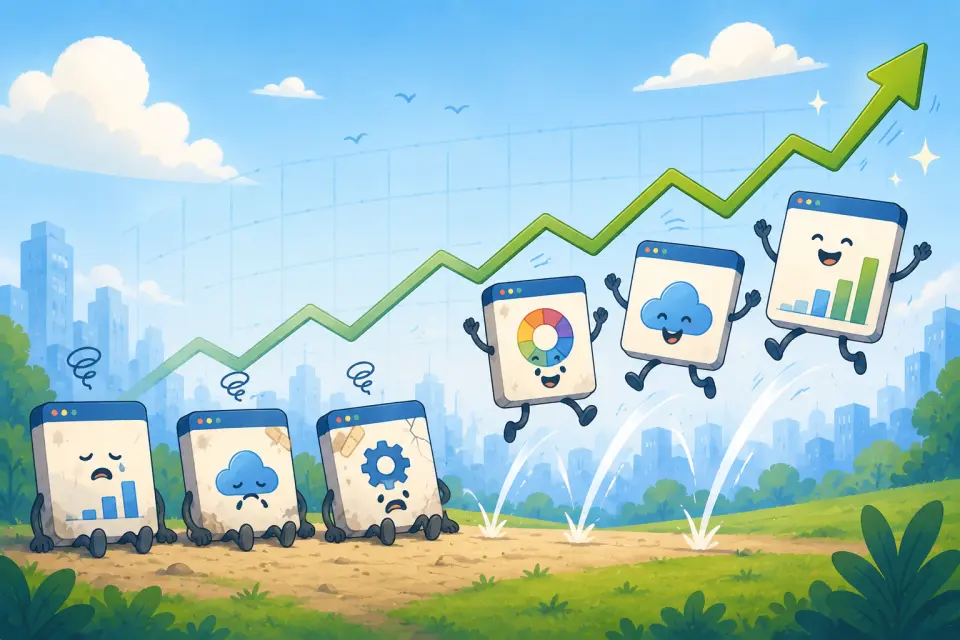
Only a short time ago, investors were asking whether artificial intelligence would make a large part of the software industry obsolete. The fear was easy to understand. If an AI agent can write code, answer a customer question, create a report, or automate a workflow, why should a company keep paying for so many software subscriptions? That anxiety helped trigger a sharp selloff in enterprise-software shares earlier this year. Then Salesforce reported its latest quarter, raised its outlook, and the mood changed quickly. Its stock jumped 22.6% on August 27, according to the Associated Press, helping lead a broader technology rally.

One strong earnings report does not prove that every software company is safe, and it certainly does not make any stock a guaranteed buy. But it does challenge the simplest version of the AI-disruption story. Salesforce reported $11.3 billion in quarterly revenue, including $10.8 billion in subscription and support revenue, while its current remaining performance obligation reached $33.5 billion. In plain English, customers are still committing meaningful money to the software they rely on. That is why the market reaction mattered: it was a vote of confidence that AI might become a new feature, revenue stream, and reason to stay inside an existing software platform rather than a universal replacement for one.
Why Software Became So Important In The First Place
Software dominates modern business because it quietly runs the work that happens after the meeting ends. It holds customer records, manages payroll, tracks inventory, protects networks, closes the accounting books, schedules employees, moves projects forward, stores documents, and connects teams. A company can replace a single app more easily than it can replace the systems that carry its data and processes every day. Once a platform is deeply embedded, changing it can be expensive, disruptive, and risky.

That stickiness is one reason software stocks have been so powerful over the last decade. Many companies sell subscriptions instead of one-time products, creating recurring revenue that can be more predictable than a traditional sale. The cost of serving one additional digital customer can also be much lower than the cost of opening a new factory or shipping a physical product. The best businesses combine those economics with high customer retention, steady cash generation, and a product that becomes harder to leave as more teams depend on it. Those are attractive traits, but they are business advantages, not an excuse to ignore valuation or competition.
AI Is A Threat And A Tool
AI is a real threat to parts of the software market. It lowers the cost of building simple tools, can automate routine work, and may give customers less reason to pay for a separate product that only does one narrow task. A software company whose main value is a basic interface around a common workflow may find that competition arrives faster and prices become harder to defend. The recent panic had a useful message inside it: no software business gets a permanent pass simply because it used to grow quickly.
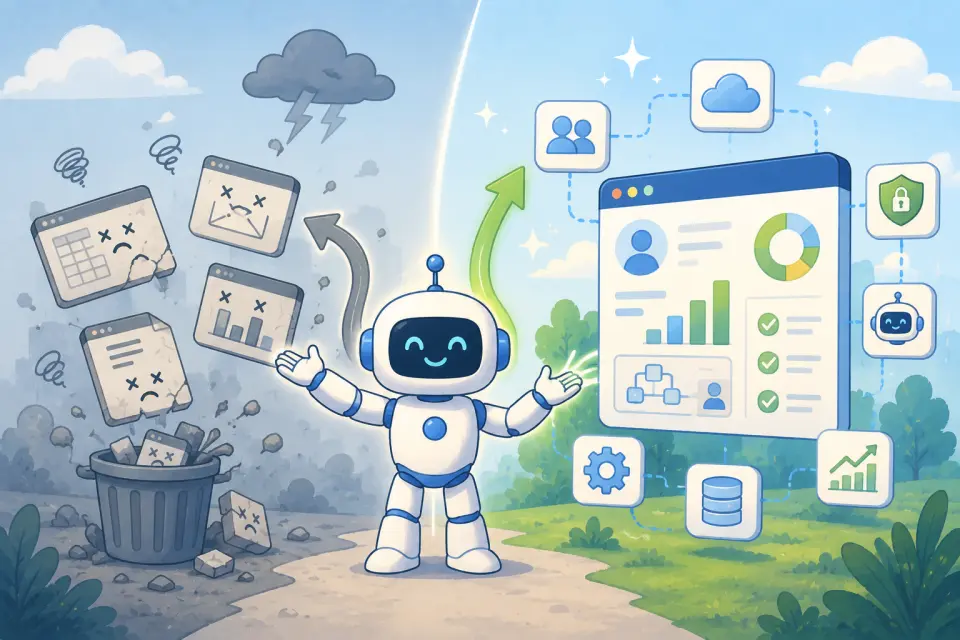
But AI can also reinforce the companies that already sit inside important workflows. To be useful at a large company, an AI system needs access to accurate data, clear permissions, security controls, a record of what it did, and a way to act inside existing systems. Those are exactly the places where established enterprise-software platforms have an advantage. The value may shift away from a simple menu of features and toward a trusted layer that connects data, people, rules, and automated actions. The winners will not be the companies that merely attach the letters AI to a product page. They will be the companies that can prove it saves time, increases revenue, reduces risk, or improves a customer experience.
The Next Few Years May Create A Smaller Group Of Bigger Winners
My view is that software will remain one of the most important parts of the market over the next several years, but its leadership will be less evenly shared. The broad category may grow while the gap between strong and weak companies gets wider. Businesses with durable customer relationships, proprietary or well-organized data, deep workflow integration, security credibility, and the ability to measure AI's return on investment are positioned to gain. They have something more defensible than an attractive app: they have a place in the operating system of a business.

Other companies may struggle. A product that can be recreated quickly, has weak customer retention, sells a feature instead of a mission-critical workflow, or needs heavy sales spending to keep growing may face pressure from AI-native competitors. Some companies will also discover that AI raises their own computing costs faster than it lifts revenue. That is why a future where software matters more does not automatically mean every software stock rises. The industry can be dominant and still be a difficult place to pick winners.
From Paying For Seats To Paying For Work
The old software model was often simple: charge a company for every employee who gets a login. That model is not disappearing tomorrow, but AI could change what customers want to pay for. Instead of paying only for access, a company may pay for usage, automated tasks, successful outcomes, or a pool of AI work credits. Salesforce calls some of this activity Agentic Work Units, illustrating a larger shift: software may increasingly be priced around work completed, not just seats occupied.
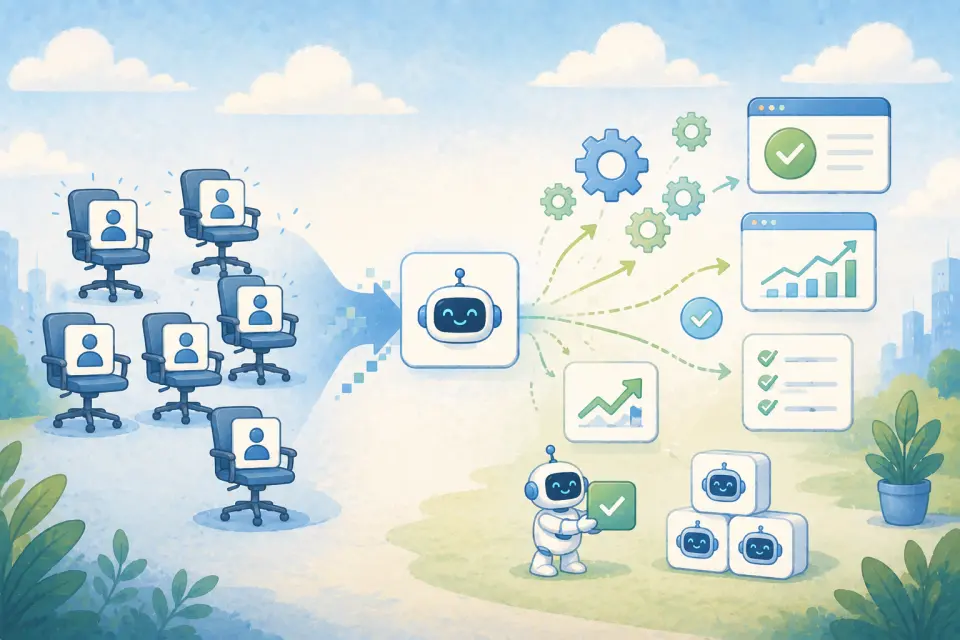
That could make the best platforms more valuable if they can help customers do more with the same headcount and share in the economic value they create. It could also make revenue less predictable for companies that depend on a large number of human users. Investors will need to watch whether an AI product is bringing genuinely new spending, simply moving money from one software budget to another, or quietly reducing the number of traditional subscriptions. The revenue model is evolving, and the scoreboard has to evolve with it.
What This Means For Investors
It is tempting to treat a dramatic one-day price move as a verdict on the future. It is not. Salesforce's results were an important data point, and the AP and Axios coverage showed how quickly the market's narrative changed, but the larger test will play out over many quarters. Investors should look for evidence: subscription renewal rates, remaining contract commitments, free cash flow, customer adoption, pricing power, operating margins, and whether AI revenue is durable rather than promotional.

The more practical lesson is to distinguish a technology trend from an investment decision. AI is likely to change enterprise software profoundly. That does not tell us the right purchase price for a particular stock, how much of the change is already reflected in a share price, or which company will execute best. A diversified portfolio does not need a perfect prediction about the next software champion. For anyone researching an individual company, the interesting question is not simply whether it has AI. It is why customers will keep paying that company when the technology gets cheaper and faster. The answer may shape the software winners of the next few years.
Sources
- Tech stocks lead Wall Street after Nvidia, Salesforce and others say AI is creating big growth Associated Press
- Salesforce Delivers Record Second Quarter Fiscal 2027 Results Salesforce Investor Relations
- Software stocks make a comeback Axios
- 2026 H1 Enterprise Software Earnings Reveal A New Vendor Power Play Forrester
- The State of AI in 2026 McKinsey
- software stocks
- enterprise software
- AI stocks
- Salesforce stock
- SaaS investing
- artificial intelligence
- cloud software
- technology stocks
- stock market
- investing risk